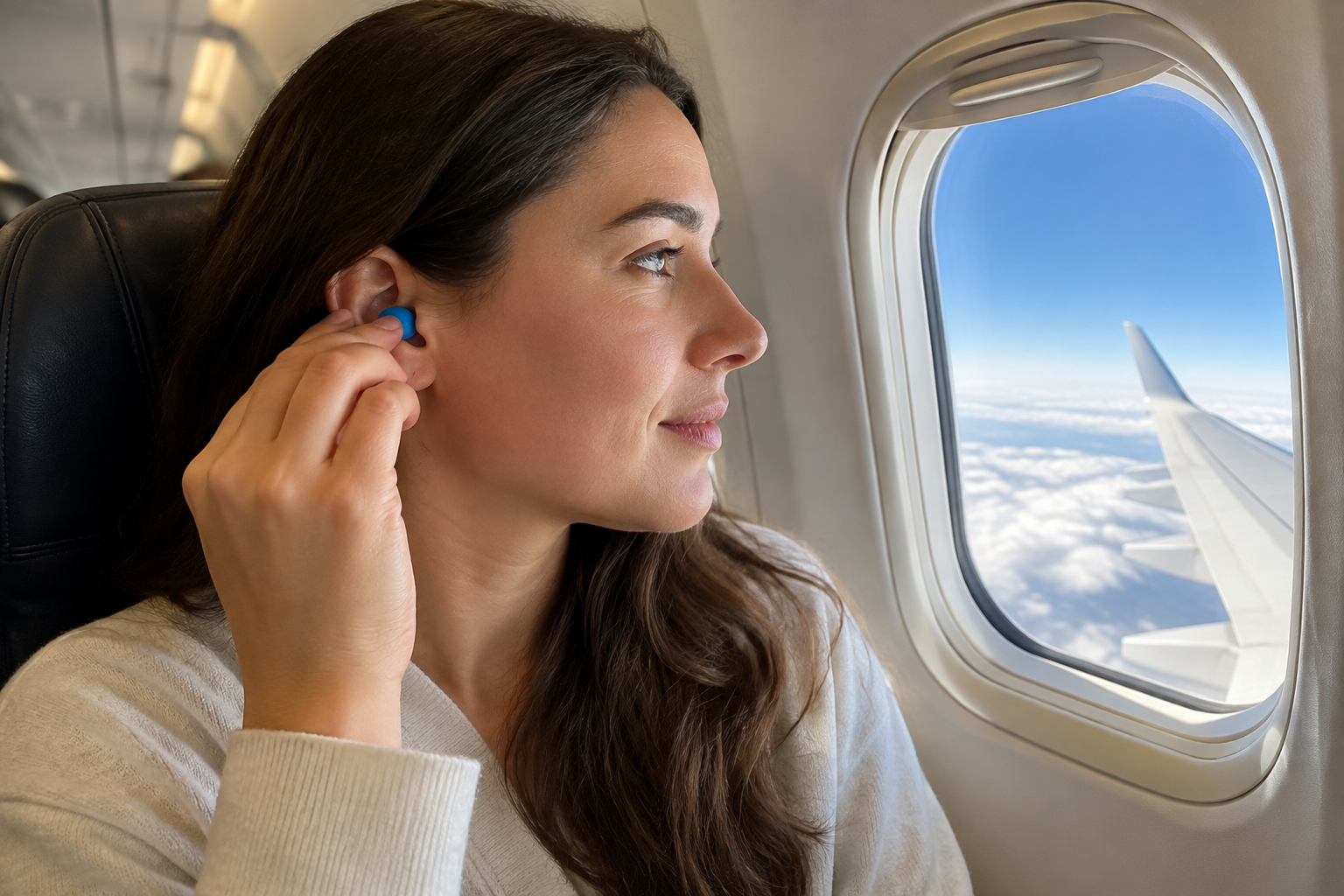
Flying can be an exciting part of travelling, but changes in cabin pressure can sometimes make your ears feel blocked, painful or uncomfortable. This is especially common during take-off and landing, when the air pressure inside the aircraft changes quickly.
For most people, ear discomfort while flying is temporary and harmless. However, knowing how to protect your ears when flying can make your journey much more comfortable and help reduce the risk of problems such as ear pain, pressure or temporary hearing changes.
Whether you fly Pressure-Regulating Earplugs regularly or are preparing for your next holiday, these simple tips can help you look after your ears before, during and after a flight.
Why Do Your Ears Hurt When Flying?
The main reason your ears may hurt during a flight is a difference in air pressure. The middle ear has air, which must remain at a similar pressure as the air around you. This pressure is balanced by the Eustachian tube that links the middle ear with the back of the nose and throat.
Cabin pressure is reduced during take-off as the aircraft ascends. It rises during landing when the plane is on the way down. When the Eardrum is not opened fast enough, a pressure may accumulate on one side of the eardrum.
This may cause:
- Fullness or stuffiness in the ears
- Earache or pressure
- Sounds of popping or clicking
- Muffled hearing
- Some mild dizziness.
Children can be particularly prone to ear discomfort because their Eustachian tubes are smaller and may not equalise pressure as easily as adults.
7 Ways to Protect Your Ears When Flying
Fortunately, one can minimize Ear Pressure and discomfort during air travel by a few easy methods.
Consider Pressure-Regulating Earplugs
Some travellers might find it easier to cope with the changing cabin pressure with specialised pressure-regulating earplugs. These earplugs are meant to reduce the speed at which the ear receives the changes in pressure.
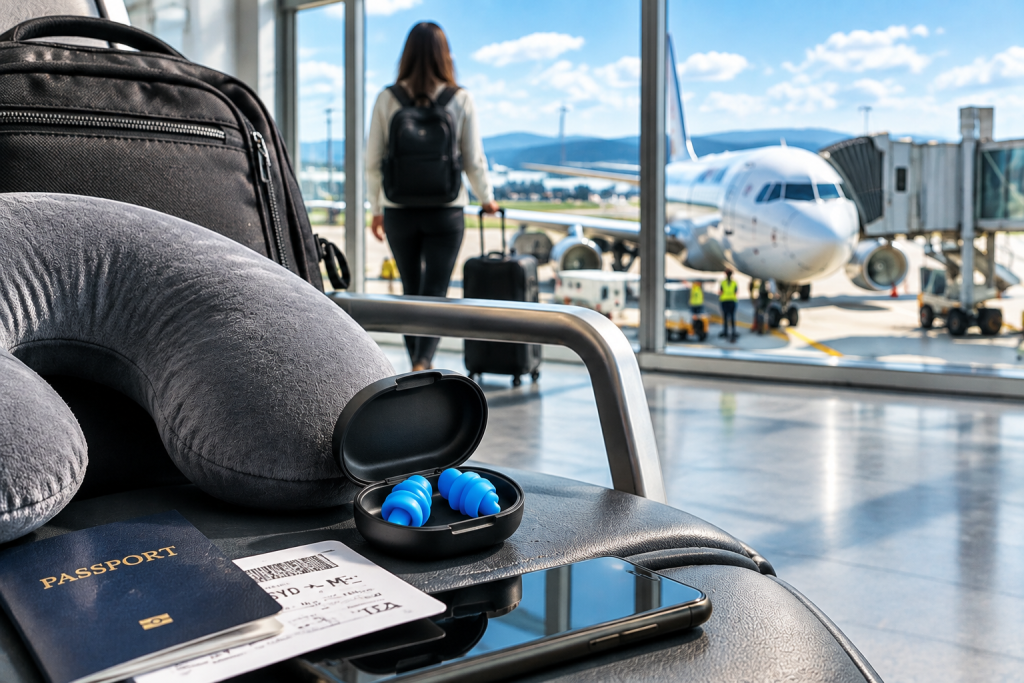
Specialised Earplugs For Travel can be useful for people who frequently experience discomfort or want to reduce unwanted aircraft noise.
Swallow, Yawn and Chew
It is one of the simplest methods of equalising pressure to get your Eustachian tubes to open. The act of swallowing, yawning and chewing naturally stimulate these tube muscles.
Chew gum or suck a lolly during take-off and especially during the descent of the aircraft. Frequent swallowing can also be promoted by drinking water.
In the case of babies and young children, it can be beneficial to feed them or give them a bottle during take-off and landing since sucking and swallowing can aid in pressure equalisation.
Try the Valsalva Manoeuvre
Your ears may feel blocked and the Valsalva manoeuvre can assist in relieving the pressure. Close your mouth, squeeze your nose and attempt to breathe out slowly with your nostrils closed. You ought to experience some pressure in your ears.
One should not blow hard because too much pressure may end up ruining the eardrum.
The other alternative is the Toynbee manoeuvre. This is by pinching your nose and swallowing simultaneously. This is more comfortable to some people.
Stay Awake During Landing
If you are someone who experiences ear pain when flying, try to stay awake during the descent. Sleeping through this part of the journey means you may not swallow or yawn frequently enough to equalise the pressure.
Be especially attentive when the plane starts to descend. Have water, chewing gum or a lolly close by so that you can take them when you need them.
Manage Colds and Nasal Congestion
Ear pressure issues can be increased by the presence of a cold, blocked nose, sinus infection or severe nasal congestion during flight. The congestion may disrupt the usual opening of the Eustachian tubes, which makes it difficult to equalise the pressure in your ears.
When you have a severe cold or respiratory infection, avoid flying, if possible. In case you have to travel, discuss with a doctor or a pharmacist how you can handle your symptoms.
Certain individuals might be recommended to take a nasal decongestant prior to flying, yet these are not applicable to all. In case of doubt, always check the instructions and consult a professional.
Keep Your Ears Healthy Before Your Flight
Flying can also be made comfortable with good general ear health. Do not insert cotton buds or other items into your ear canal, as they may force earwax further into the ear or irritate it.
In case you are used to having blocked ears or excessive earwax, it is worth talking to a medical professional before travelling. Before you board the plane, it can help to treat an ear issue that you have beforehand to minimize the likelihood of experiencing pain during flight.
Give Your Ears Time to Recover
After a flight, it is natural to experience a bit of ear congestion in your ears. The sensation fades away on its own in most instances as your ears have time to equalise.
Continue swallowing, yawning and gently moving your jaw after landing. Being hydrated can also make you feel more comfortable. For travellers who want to reduce unwanted background noise after landing, Loop Earplugs can also be a useful option for a quieter and more comfortable journey.
If your symptoms persist or become severe, however, it is worth seeking medical advice.
When Should You See a Doctor?
Most cases of ear pressure from flying resolve without treatment. However, persistent or severe symptoms should not be ignored.
Talk to a doctor in case of severe ear pain, hearing loss, fluid or blood in the ear, persistent dizziness, and non-improving symptoms after your flight.
People with existing ear issues, have had ear surgery in the recent past or have had severe issues with ear pressure should also consult their doctor prior to flying. A medical worker can provide information on whether it is safe to travel and prescribe appropriate precautions.
Make Your Next Flight More Comfortable
Protecting your ears when flying does not have to be complicated. Simple habits such as using good quality earplugs, swallowing frequently, chewing gum, yawning and staying awake during descent can help your ears adjust to changing cabin pressure.
When you are likely to have ear pain, it is even more important to plan ahead. Control the stuffiness of the nose where necessary, think about pressure-controlling earplugs and treat ear issues before travelling.
With the right precautions, you can minimise ear discomfort and enjoy a more comfortable flight from take-off to landing. Choosing suitable Earplugs For Flying can also help make air travel more comfortable.