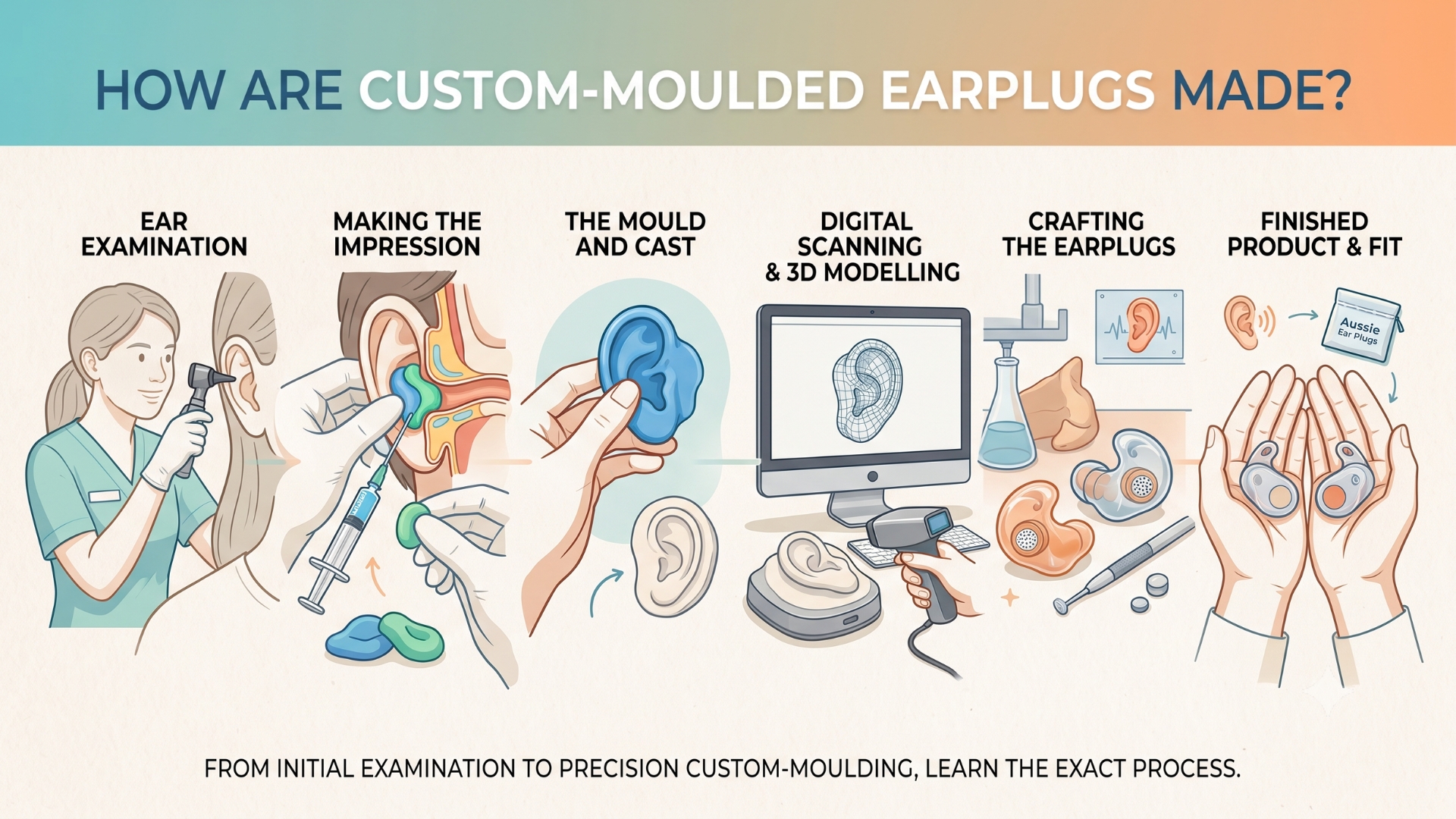
Earplugs are custom-moulded to fit the shape of the ears of an individual. Custom earplugs are made based on impressions of the ear canal compared to standard foam or silicone earplugs, which are made in general sizes and shapes. This custom design may offer a comfortable fit, consistent noise dampening and enhanced stability in everyday endeavors.
But how are custom-moulded earplugs made? The process combines professional ear impressions, digital or physical moulding techniques, specialised materials and careful quality testing. Here is a simple look at each major stage.
Understanding Custom-Moulded Earplugs
Custom-moulded earplugs are hearing protection devices that are designed to fit an individual. They can be used to sleep, swim, work in noisy places, go to concerts or use them to protect hearing during recreational activities.
Since they are designed to fit into the ears of the user, they may be more comfortable and secure than most universal-fit models. Other custom earplugs also include acoustic filters, which enable the user to filter out harmful noise but still hear speech and other surrounding sounds.
The Initial Ear Examination
Manufacturing process starts with an analysis of ears. An ear canal and surrounding area are examined by a trained hearing professional to ensure that an impression can be taken safely.
The professional seeks problems like excessive earwax, irritation, infection or other problems that may influence the impression process. This is necessary since the proper and secure ear impression is the basis of a properly-fitting custom earplug.
Taking the Ear Impression
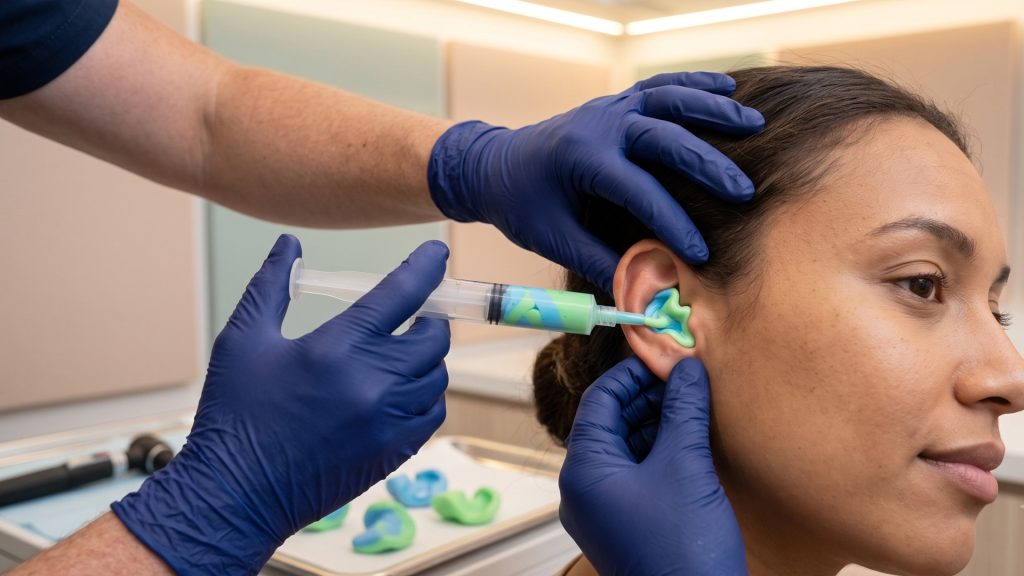
After the ears are found fit, the professional makes an impression of the ear. A special impression material is delicately inserted into the ear canal and outer ear.
The material occupies the corresponding spaces without discomfort and fixes the shapes of the ear. It is then left to dry. The impression is then removed after hardening.
The correct impression should have enough detail to recreate the shape of the ear. Any minor mistakes during this phase may influence the ultimate fit hence the process is done by trained professionals.
Creating a Digital Ear Model
Digital technology can be employed by modern manufacturers. A physical ear impression can be scanned to produce a detailed three-dimensional digital model.
This model enables the technicians to see the shape of the ear on a computer and make accurate adjustments prior to manufacturing. Digital workflows also may simplify the storage, reproduction and modification of designs when needed.
Other manufacturers are direct off the digital ear scan, whereas others still use the old physical impressions.
Designing the Custom Earplug
The second thing to do is to design the earplug itself. The ear model helps the technician to understand the shape, size and features that the individual user needs.
The design can have acoustic filters, ventilation features, handles, cords or other features depending on the purpose of the design. The idea is to develop an earplug that fits well without causing undue stress to delicate regions.
The design should also be able to accommodate the intended degree of noise reduction in terms of hearing protection.
Selecting the Right Material
Another significant aspect of custom-moulded earplugs is the choice of materials. Manufacturers can employ materials like medical grade silicone, acrylic or other specialised polymers.
The flexibility and comfort of soft silicone are frequently appreciated, whereas harder materials can offer durability and alternative fit. The ideal material will be based on the earplug purpose and user requirements.
For example, swimming earplugs might need other properties than hearing-protection earplugs used in industrial settings.
Manufacturing the Earplugs
After the design is finalised, the earplugs are manufactured. This can be moulding, casting, machining or 3D printing depending on the manufacturer and design.
In the conventional moulding, the desired material is shaped around a model of the ear impression of the user. Under digital manufacturing, a computer-controlled system is able to make the earplug out of the digital design.
The manufacturing process is chosen to attain the desired shape, consistency, durability and acoustic performance.
Adding Filters and Other Features
Not all custom-moulded earplugs are just solid plugs. They may have specialised acoustic filters that regulate the amount of sound that is sent to the ear.
To musicians and concert attendees, filtered earplugs may allow the total sound levels to be reduced, and still retain more of the natural sound of music. Occupational earplugs can be developed to offer the right protection in a noisy working environment.
Additional models can incorporate cords, handles or colour choices to make it convenient and easy to identify.
Finishing and Quality Inspection
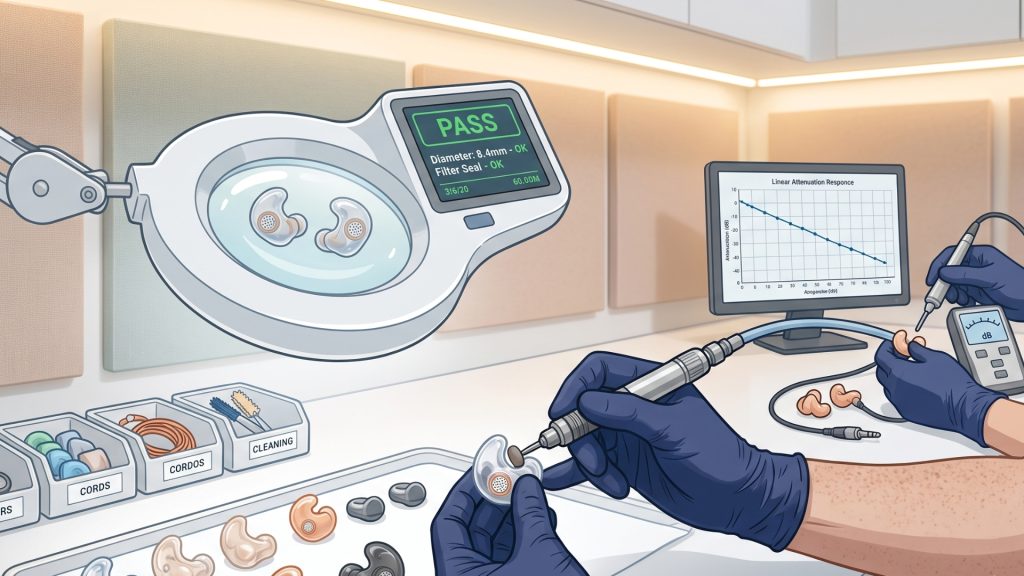
The earplugs are finished after the manufacturing process. Superfluous material is eliminated, surfaces are flattened and edges are tested to be comfortable.
The earplugs are then checked by technicians to make sure they are of the approved design. They can check the dimensions, filter placement, surface quality and general construction.
Quality control is crucial since even the slightest manufacturing flaw can influence comfort or performance.
Fitting and Final Adjustments
The completed earplugs are usually tested in the ears of the user. The professional would assess the fit, the comfort and the security positioning.
If necessary, adjustments can be made. The earplug used must be a custom earplug that fits snugly without causing painful pressure. The user should also be able to insert and remove it easily.
In the case of hearing-protection products, the fit testing can also be employed to determine the effectiveness of the earplugs to the individual user.
Care, Maintenance and Replacement
Creating earplugs in custom-moulds is just a portion of achieving the best outcomes. With proper care, it is possible to keep them comfortable and performing.
When not in use, users are advised to clean their earplugs as per the instructions of the manufacturer and keep them in a protective case. They are also supposed to check them frequently to see cracks, damage, deformation or alterations in fitting.
Earplugs might require replacement over time, particularly when the ear shape of the user alters or when the material used becomes damaged.